The fragments and testimonia of the early Greek philosophers (often labeled the Presocratics) have always been not only a fundamental source for understanding archaic Greek culture and ancient philosophy but also a perennially fresh resource that has stimulated Western thought until the present day. This ...
Volume II: beginnings and early ionian thinkers, part 1
Harvard University Press. Cambridge, 2016
The fragments and testimonia of the early Greek philosophers (often labeled the Presocratics) have always been not only a fundamental source for understanding archaic Greek culture and ancient philosophy but also a perennially fresh resource that has stimulated Western thought until the present day. This ...
Caesar (C. Iulius, 102–44 BC), statesman and soldier, defied the dictator Sulla; served in the Mithridatic wars and in Spain; entered Roman politics as a “democrat” against the senatorial government; was the real leader of the coalition with Pompey and Crassus; conquered all Gaul ...
Aurelius Augustine (AD 354–430), one of the most important figures in western Christianity and philosophy, was the son of a pagan, Patricius of Tagaste, and his Christian wife, Monnica. While studying to become a rhetorician, he plunged into a turmoil of philosophical and psychological ...
Statius "Silvae," thirty-two occasional poems, were written probably between 89 and 96 CE. Here the poet congratulates friends, consoles mourners, offers thanks, admires a monument or artistic object, and describes a memorable scene. The verse is light in touch, with a distinct pictorial quality. Statius ...
Sallust, Gaius Sallustius Crispus (86 35 BCE), a Sabine from Amiternum, acted as tribune against Cicero and Milo in 52, joined Caesar after being expelled from the Senate in 50, was restored to the Senate by Caesar and took part in his African campaign as ...
Aurelius Augustine (354-430 CE), one of the most important figures in the development of western Christianity and philosophy, was the son of a pagan, Patricius of Tagaste, and his Christian wife, Monnica. While studying to become a rhetorician, he plunged into a turmoil of philosophical ...
The rollicking comedies of Plautus, who brilliantly adapted Greek plays for Roman audiences c. 205--184 bce, are the earliest Latin works to survive complete and are cornerstones of the European theatrical tradition from Shakespeare and Moliere to modern times. This fifth volume of a new ...
Sallust, Gaius Sallustius Crispus (86-35 BCE), a Sabine from Amiternum, acted against Cicero and Milo as tribune in 52, joined Caesar after being expelled from the Senate in 50, was restored to the Senate by Caesar and took part in his African campaign as praetor ...
Plato of Athens, who laid the foundations of the Western philosophical tradition and in range and depth ranks among its greatest practitioners, was born to a prosperous and politically active family ca. 427 bce. In early life an admirer of Socrates, Plato later founded the ...
The historian Polybius (ca. 200--118 bc) was born into a leading family of Megalopolis in the Peloponnese and served the Achaean League in arms and diplomacy for many years. From 168 to 151 he was held hostage in Rome, where he became a friend of ...
The rollicking comedies of Plautus, who brilliantly adapted Greek plays for Roman audiences c. 205--184 bc, are the earliest Latin works to survive complete and are cornerstones of the European theatrical tradition from Shakespeare and Moliere to modern times. This fourth volume of a new ...
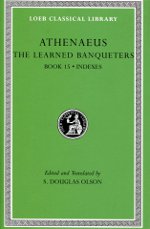
In The Learned Banqueters, Athenaeus describes a series of dinner parties at which the guests quote extensively from Greek literature. The work (which dates to the very end of the second century ad) is amusing reading and of extraordinary value as a treasury of quotations ...
This is the tenth volume in the Loeb Classical Library’s ongoing edition of Hippocrates’s invaluable texts, which provide essential information about the practice of medicine in antiquity and about Greek theories concerning the human body. Here, Paul Potter presents the Greek text with ...
The historian Polybius (ca. 200–118 BCE) was born into a leading family of Megalopolis in the Peloponnese and served the Achaean League in arms and diplomacy for many years. From 168 to 151 he was held hostage in Rome, where he became a friend ...
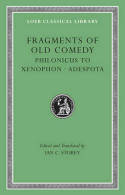
The era of Old Comedy (c. 485 -- c. 380 BCE), when theatrical comedy was created and established, is best known through the extant plays of Aristophanes, but there were many other poets whose comedies survive only in fragments. This new Loeb edition, the most extensive ...
Utilizamos cookies propias y de terceros para mejorar nuestros servicios y facilitar la navegación. Si continúa navegando consideramos que acepta su uso.