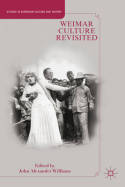
For decades after the Second World War, historians and writers depicted cultural life in Germany's Weimar Republic (1918-1933) as an unstable mixture of avant-garde experimentation, decadence, and proto-fascist tendencies. However, they defined "culture" in terms of a canon created by elites, excluding the everyday ...
For decades after the Second World War, historians and writers depicted cultural life in Germany's Weimar Republic (1918-1933) as an unstable mixture of avant-garde experimentation, decadence, and proto-fascist tendencies. However, they defined "culture" in terms of a canon created by elites, excluding the everyday ...
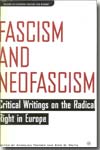
The dramatic transformations of the 1990s - the end of the Cold War, the establishment of political liberties and market economies in Eastern Europe, German unification - quickly led commentators to proclaim the end of all ideologies and the complete triumph of liberal capitalism. Just as quickly ...
The dramatic transformations of the 1990s - the end of the Cold War, the establishment of political liberties and market economies in Eastern Europe, German unification - quickly led commentators to proclaim the end of all ideologies and the complete triumph of liberal capitalism. Just as quickly ...
Utilizamos cookies propias y de terceros para mejorar nuestros servicios y facilitar la navegación. Si continúa navegando consideramos que acepta su uso.