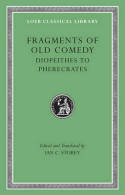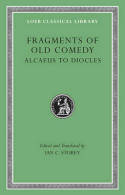
The era of Old Comedy (c. 485 -- c. 380 BCE), when theatrical comedy was created and established, is best known through the extant plays of Aristophanes, but there were many other poets whose comedies survive only in fragments. This new Loeb edition, the most extensive ...
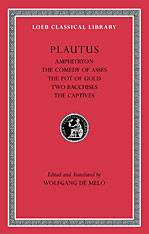
The rollicking comedies of Plautus, who brilliantly adapted Greek plays for Roman audiences c. 205–184 BCE, are the earliest Latin works to survive complete and are cornerstones of the European theatrical tradition from Shakespeare and Molière to modern times.
This first volume of a ...
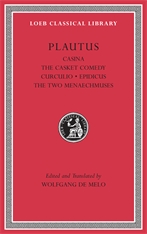
The rollicking comedies of Plautus, who brilliantly adapted Greek plays for Roman audiences c. 205–184 BCE, are the earliest Latin works to survive complete and are cornerstones of the European theatrical tradition from Shakespeare and Molière to modern times.
This first volume of a ...
The rollicking comedies of Plautus, who brilliantly adapted Greek plays for Roman audiences c. 205–184 BCE, are the earliest Latin works to survive complete and are cornerstones of the European theatrical tradition from Shakespeare and Molière to modern times.
This second volume of a ...
The rollicking comedies of Plautus, who brilliantly adapted Greek plays for Roman audiences c. 205–184 BCE, are the earliest Latin works to survive complete and are cornerstones of the European theatrical tradition from Shakespeare and Molière to modern times.
This second volume of a ...
The rollicking comedies of Plautus, who brilliantly adapted Greek plays for Roman audiences c. 205–184 BCE, are the earliest Latin works to survive complete and are cornerstones of the European theatrical tradition from Shakespeare and Molière to modern times.
This third volume of a ...
The rollicking comedies of Plautus, who brilliantly adapted Greek plays for Roman audiences c. 205–184 BCE, are the earliest Latin works to survive complete and are cornerstones of the European theatrical tradition from Shakespeare and Molière to modern times.
This third volume of a ...
The Saturnalia, Macrobius’s encyclopedic celebration of Roman culture written in the early fifth century CE, has been prized since the Renaissance as a treasure trove of otherwise unattested lore. Cast in the form of a dialogue, the Saturnalia treats subjects as diverse as the ...
Aristotle of Stagirus (384–322 BCE), the great Greek philosopher, researcher, logician, and scholar, studied with Plato at Athens and taught in the Academy (367–347). Subsequently he spent three years in Asia Minor at the court of his former pupil Hermeias, where he married ...
In The Learned Banqueters, Athenaeus describes a series of dinner parties at which the guests quote extensively from Greek literature. The work (which dates to the very end of the second century CE) is amusing reading and of extraordinary value as a treasury of quotations ...
Aristotle of Stagirus (384–322 BCE), the great Greek philosopher, researcher, logician, and scholar, studied with Plato at Athens and taught in the Academy (367–347). Subsequently he spent three years in Asia Minor at the court of his former pupil Hermeias, where he married ...
Galen of Pergamum (129–?199/216), physician to the court of the emperor Marcus Aurelius, was a philosopher, scientist, and medical historian, a theoretician and practitioner, who wrote forcefully and prolifically on an astonishing range of subjects and whose impact on later eras rivaled that ...
The historian Polybius (ca. 200–118 BCE) was born into a leading family of Megalopolis in the Peloponnese and served the Achaean League in arms and diplomacy for many years, favoring alliance with Rome. From 168 to 151 he was held hostage in Rome, where ...
The historian Polybius (ca. 200--118 BCE) was born into a leading family of Megalopolis in the Peloponnese and served the Achaean League in arms and diplomacy for many years, favoring alliance with Rome. From 168 to 151 he was held hostage in Rome, where he ...
This is the ninth volume in the Loeb Classical Library’s ongoing edition of Hippocrates’s invaluable texts, which provide essential information about the practice of medicine in antiquity and about Greek theories concerning the human body. Here Paul Potter presents the Greek text with ...
In The Learned Banqueters, Athenaeus describes a series of dinner parties at which the guests quote extensively from Greek literature. The work (which dates to the very end of the second century CE) is amusing reading and of extraordinary value as a treasury of quotations ...
The historian Polybius (ca. 200-118 BCE) was born into a leading family of Megalopolis in the Peloponnese (Morea) and served the Achaean League in arms and diplomacy for many years, favoring alliance with Rome. From 168 to 151 he was held hostage in Rome, where ...
In Longus’s ravishing Daphnis and Chloe (second or early third century CE), one of the great works of world literature, an innocent boy and girl gradually discover their sexuality in an idealized pastoral environment. In Xenophon’s Anthia and Habrocomes (first century CE), perhaps ...
Cicero (Marcus Tullius, 106-43 BCE), Roman advocate, orator, politician, poet, and philosopher, about whom we know more than we do of any other Roman, lived through the stirring era that saw the rise, dictatorship, and death of Julius Caesar in a tottering republic. In Cicero ...
Utilizamos cookies propias y de terceros para mejorar nuestros servicios y facilitar la navegación. Si continúa navegando consideramos que acepta su uso.