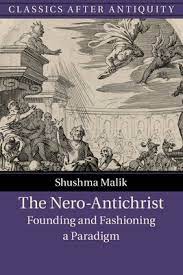
It has traditionally been assumed that biblical writers considered Nero to be the Antichrist.. This book refutes that view. Beginning by challenging the assumption that literary representations of Nero as tyrant would have been easily recognisable to those in the eastern Roman empire, where most ...
It has traditionally been assumed that biblical writers considered Nero to be the Antichrist.. This book refutes that view. Beginning by challenging the assumption that literary representations of Nero as tyrant would have been easily recognisable to those in the eastern Roman empire, where most ...
Dionysus after Nietzsche examines the way that The Birth of Tragedy (1872) by Friedrich Nietzsche irrevocably influenced twentieth-century literature and thought. Adam Lecznar argues that Nietzsche's Dionysus became a symbol of the irrational forces of culture that cannot be contained, and explores the presence ...
Dionysus after Nietzsche examines the way that The Birth of Tragedy (1872) by Friedrich Nietzsche irrevocably influenced twentieth-century literature and thought. Adam Lecznar argues that Nietzsche's Dionysus became a symbol of the irrational forces of culture that cannot be contained, and explores the presence ...
This book explores the ways in which Aristotle's legacy was appropriated and reshaped by vernacular readers in Medieval and Renaissance Italy. It considers translation in a broad sense, looking at commentaries, compendia, rewritings, and abridgments alongside vernacular versions of Aristotle's works. Translation is ...
This book explores the ways in which Aristotle's legacy was appropriated and reshaped by vernacular readers in Medieval and Renaissance Italy. It considers translation in a broad sense, looking at commentaries, compendia, rewritings, and abridgments alongside vernacular versions of Aristotle's works. Translation is ...
Utilizamos cookies propias y de terceros para mejorar nuestros servicios y facilitar la navegación. Si continúa navegando consideramos que acepta su uso.