Aristotle's Politics is a key document in Western political thought. In these first two books Aristotle shows his complete mastery of political theory and practice, and raises many crucial issues still with us today. In Book I he argues vigorously for a political theory ...
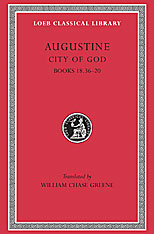
Augustinus (354–430 CE), son of a pagan, Patricius of Tagaste in North Africa, and his Christian wife Monica, while studying in Africa to become a rhetorician, plunged into a turmoil of philosophical and psychological doubts in search of truth, joining for a time the ...
Cicero’s letters to his brother, Quintus, allow us an intimate glimpse of their world. Vividly informative too is Cicero’s correspondence with Brutus dating from the spring of 43 BCE, which conveys the drama of the period following the assassination of Julius Caesar. These ...
Silius (T. Catius Silius Italicus), 25–101 CE, was consul in 68 and governor of the province of Asia in 69; he sought no further office but lived thereafter on his estates as a literary man and collector. He revered the work of Cicero, whose ...
Aristotle, great Greek philosopher, researcher, reasoner, and writer, born at Stagirus in 384 BCE, was the son of Nicomachus, a physician, and Phaestis. He studied under Plato at Athens and taught there (367–47); subsequently he spent three years at the court of a former ...
Procopius, born at Caesarea in Palestine late in the 5th century, became a lawyer. In 527 CE he was made legal adviser and secretary of Belisarius, commander against the Persians, and went with Belisarius again in 533 against the Vandals and in 535 against the ...
Pausanias, born probably in Lydia in Asia Minor, was a Greek of the second century CE, about 120–180, who traveled widely not only in Asia Minor, Palestine, Egypt, and North Africa, but also in Greece and in Italy, including Rome. He left a description ...
Of the Greek lyric poets, Pindar (ca. 518–438 BCE) was “by far the greatest for the magnificence of his inspiration” in Quintilian’s view; Horace judged him “sure to win Apollo’s laurels.” The esteem of the ancients may help explain why a good ...
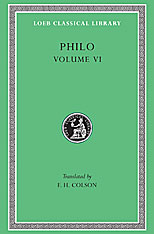
The philosopher Philo was born about 20 BCE to a prominent Jewish family in Alexandria, the chief home of the Jewish Diaspora as well as the chief center of Hellenistic culture; he was trained in Greek as well as Jewish learning. In attempting to reconcile ...
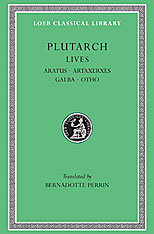
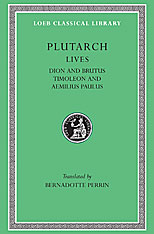
Plutarch (Plutarchus), ca. 45–120 CE, was born at Chaeronea in Boeotia in central Greece, studied philosophy at Athens, and, after coming to Rome as a teacher in philosophy, was given consular rank by the emperor Trajan and a procuratorship in Greece by Hadrian. He ...
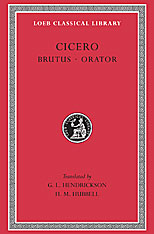
Brutus gives an account of the Roman tradition of public and law-court speeches from its beginning to what Cicero described as the polished and entertaining speeches of his own day. Along the way Cicero has interesting things to say about the influence of the speaker ...
Augustinus (354–430 CE), son of a pagan, Patricius of Tagaste in North Africa, and his Christian wife Monica, while studying in Africa to become a rhetorician, plunged into a turmoil of philosophical and psychological doubts in search of truth, joining for a time the ...
Cicero (Marcus Tullius, 106–43 BCE), Roman lawyer, orator, politician and philosopher, of whom we know more than of any other Roman, lived through the stirring era which saw the rise, dictatorship, and death of Julius Caesar in a tottering republic. In his political speeches ...
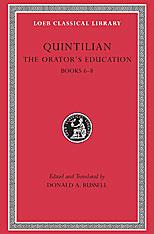
Quintilian, born in Spain about 35 CE, became a widely known and highly successful teacher of rhetoric in Rome. The Orator’s Education (Institutio Oratoria), a comprehensive training program in twelve books, draws on his own rich experience. It is a work of enduring importance ...
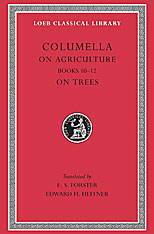
Columella (Lucius Iunius Moderatus) of Gades (Cadiz) lived in the reigns of the first emperors to about 70 CE. He moved early in life to Italy where he owned farms and lived near Rome. It is probable that he did military service in Syria and ...
Plutarch (Plutarchus), ca. 45–120 CE, was born at Chaeronea in Boeotia in central Greece, studied philosophy at Athens, and, after coming to Rome as a teacher in philosophy, was given consular rank by the emperor Trajan and a procuratorship in Greece by Hadrian. He ...
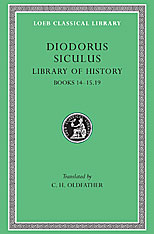
Diodorus Siculus, Greek historian of Agyrium in Sicily, ca. 80–20 BCE, wrote forty books of world history, called Library of History, in three parts: mythical history of peoples, non-Greek and Greek, to the Trojan War; history to Alexander’s death (323 BCE); and history ...
Utilizamos cookies propias y de terceros para mejorar nuestros servicios y facilitar la navegación. Si continúa navegando consideramos que acepta su uso.