Plutarch (Plutarchus), ca. 45–120 CE, was born at Chaeronea in Boeotia in central Greece, studied philosophy at Athens, and, after coming to Rome as a teacher in philosophy, was given consular rank by the emperor Trajan and a procuratorship in Greece by Hadrian. He ...
This biography of a first-century CE holy man has become one of the most widely discussed literary works of later antiquity. With an engaging style, Philostratus portrays a charismatic teacher and religious reformer from Tyana in Cappadocia (modern central Turkey) who travels across the known ...
Ammianus Marcellinus, ca. 325 - ca. 395 CE, a Greek of Antioch, joined the army when still young and served under the governor Ursicinus and the emperor of the East Constantius II, and later under the emperor Julian, whom he admired and accompanied against the Alamanni ...
Fraternal strife, and the young Achilles.
Statius published his Thebaid in the last decade of the first century. This epic recounting the struggle between the two sons of Oedipus for the kingship of Thebes is his masterpiece, a stirring exploration of the passions of civil ...
Fraternal strife, and the young Achilles.
Statius published his Thebaid in the last decade of the first century. This epic recounting the struggle between the two sons of Oedipus for the kingship of Thebes is his masterpiece, a stirring exploration of the passions of civil ...
Fraternal strife.
Statius published his Thebaid in the last decade of the first century. This epic recounting the struggle between the two sons of Oedipus for the kingship of Thebes is his masterpiece, a stirring exploration of the passions of civil war. The extant portion ...
Fraternal strife.
Statius published his Thebaid in the last decade of the first century. This epic recounting the struggle between the two sons of Oedipus for the kingship of Thebes is his masterpiece, a stirring exploration of the passions of civil war. The extant portion ...
An unrivaled compendium of ancient Roman knowledge.Pliny the Elder, Gaius Plinius Secundus (AD 23-79), a Roman of equestrian rank of Transpadane Gaul (N. Italy), was uncle of Pliny the letter writer. He pursued a career partly military in Germany, partly administrative in Gaul and ...
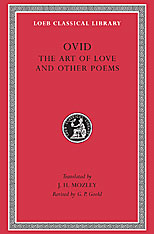
Ovid (Publius Ovidius Naso, 43 BCE–17 CE), born at Sulmo, studied rhetoric and law at Rome. Later he did considerable public service there, and otherwise devoted himself to poetry and to society. Famous at first, he offended the emperor Augustus by his Ars Amatoria ...
Dio Cassius (Cassius Dio), ca. 150–235 CE, was born at Nicaea in Bithynia in Asia Minor. On the death of his father (Roman governor of Cilicia) he went in 180 to Rome, entered the Senate, and under the emperor Commodus was an advocate. He ...
Aristotle, great Greek philosopher, researcher, reasoner, and writer, born at Stagirus in 384 BCE, was the son of Nicomachus, a physician, and Phaestis. He studied under Plato at Athens and taught there (367–47); subsequently he spent three years at the court of a former ...
Demosthenes (384–322 BCE), orator at Athens, was a pleader in law courts who later became also a statesman, champion of the past greatness of his city and the present resistance of Greece to the rise of Philip of Macedon to supremacy. We possess by ...
Manetho was an Egyptian of the third century BCE. Born probably at Sebennytus in the Delta, he became a priest or high priest at Heliopolis. Apparently he and a Greek Timotheus did much to establish the cult of Serapis in Egypt. Eight works or parts ...
Plutarch (Plutarchus), ca. 45–120 CE, was born at Chaeronea in Boeotia in central Greece, studied philosophy at Athens, and, after coming to Rome as a teacher in philosophy, was given consular rank by the emperor Trajan and a procuratorship in Greece by Hadrian. He ...
Arrian’s Anabasis of Alexander in seven books is the best account we have of Alexander’s adult life. Indica, a description of India and of Nearchus’s voyage therefrom, was to be a supplement.
A student of Epictetus, Arrian took notes at his lectures ...
Arrian’s Anabasis of Alexander in seven books is the best account we have of Alexander’s adult life. Indica, a description of India and of Nearchus’s voyage therefrom, was to be a supplement.
A student of Epictetus, Arrian took notes at his lectures ...
Augustinus (354–430 CE), son of a pagan, Patricius of Tagaste in North Africa, and his Christian wife Monica, while studying in Africa to become a rhetorician, plunged into a turmoil of philosophical and psychological doubts in search of truth, joining for a time the ...
Statius "Silvae," thirty-two occasional poems, were written probably between 89 and 96 CE. Here the poet congratulates friends, consoles mourners, offers thanks, admires a monument or artistic object, and describes a memorable scene. The verse is light in touch, with a distinct pictorial quality. Statius ...
The writings of the Apostolic Fathers give a rich and diverse picture of Christian life and thought in the period immediately after New Testament times. Some of them were accorded almost Scriptural authority in the early Church. This new Loeb Classical Library edition of these ...
Aristotle, great Greek philosopher, researcher, reasoner, and writer, born at Stagirus in 384 BCE, was the son of Nicomachus, a physician, and Phaestis. He studied under Plato at Athens and taught there (367–47); subsequently he spent three years at the court of a former ...
Utilizamos cookies propias y de terceros para mejorar nuestros servicios y facilitar la navegación. Si continúa navegando consideramos que acepta su uso.