The Ottoman Empire stood at a crossroads of intercontinental trade, stretching from the Balkans and the Black Sea region through the present day Middle East and most of the North African coast for six centuries up to World War I. The articles in this volume ...
The Ottoman Empire stood at a crossroads of intercontinental trade, stretching from the Balkans and the Black Sea region through the present day Middle East and most of the North African coast for six centuries up to World War I. The articles in this volume ...
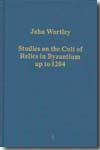
Constantinople was well known in its heyday for the enormous collection of relics housed in its churches: bones, even whole bodies and intimate possessions of holy men and women. Almost all these objects had been imported from various parts of the Roman Empire between the ...
Constantinople was well known in its heyday for the enormous collection of relics housed in its churches: bones, even whole bodies and intimate possessions of holy men and women. Almost all these objects had been imported from various parts of the Roman Empire between the ...
The twelfth century was a time of cultural renewal and innovation in Byzantium, just as it was in the west. In literature, the long disused genres of epic, satire and the novel (or 'romance') took new forms during that century; at the same time, in ...
The twelfth century was a time of cultural renewal and innovation in Byzantium, just as it was in the west. In literature, the long disused genres of epic, satire and the novel (or 'romance') took new forms during that century; at the same time, in ...
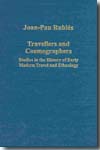
Joan-Pau Rubies brings together here eleven studies published between 1991 and 2005 that illuminate the impact of travel writing on the transformation of early modern European culture. The new worlds that European navigation opened up at the turn of the 16th century elicited a great ...
Joan-Pau Rubies brings together here eleven studies published between 1991 and 2005 that illuminate the impact of travel writing on the transformation of early modern European culture. The new worlds that European navigation opened up at the turn of the 16th century elicited a great ...
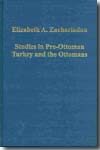
The studies included in the present collection by Elizabeth Zachariadou are concerned with the long period of transition from the Byzantine Empire to its successor, the Ottoman Empire. Among the themes covered are the processes of settlement and state-formation amongst the nomadic and often superficially ...
The studies included in the present collection by Elizabeth Zachariadou are concerned with the long period of transition from the Byzantine Empire to its successor, the Ottoman Empire. Among the themes covered are the processes of settlement and state-formation amongst the nomadic and often superficially ...
This is the fifth collection of studies on the "Hospitallers of Rhodes" by Anthony Luttrell to appear in the "Variorum Collected Studies Series". In these 24 studies, the emphasis is on the 14th century, on the central Convent facing the Turks, on the hinterland in ...
This is the fifth collection of studies on the "Hospitallers of Rhodes" by Anthony Luttrell to appear in the "Variorum Collected Studies Series". In these 24 studies, the emphasis is on the 14th century, on the central Convent facing the Turks, on the hinterland in ...
Richard Newhauser examines here aspects of the moral tradition of medieval thought, specifically the construction of the seven deadly sins, their offspring, and related schematizations of immorality in the Latin West. The emphasis in these studies is on the malleability of moral categories, their relationship ...
Richard Newhauser examines here aspects of the moral tradition of medieval thought, specifically the construction of the seven deadly sins, their offspring, and related schematizations of immorality in the Latin West. The emphasis in these studies is on the malleability of moral categories, their relationship ...
Constantinople originated in 330 A.D. as the last great urban foundation of the ancient world. When it was sacked by the Fourth Crusade in 1204, it was the greatest city of the European Middle Ages. Its transition from the one to the other was ...
Constantinople originated in 330 A.D. as the last great urban foundation of the ancient world. When it was sacked by the Fourth Crusade in 1204, it was the greatest city of the European Middle Ages. Its transition from the one to the other was ...
These studies look at general problems of reading Byzantine literature, at literacy practices and the literary process, but also at individual texts. The past thirty years have seen a revolution in the way Byzantine literature has been viewed: no longer is it considered a decadent ...
These studies look at general problems of reading Byzantine literature, at literacy practices and the literary process, but also at individual texts. The past thirty years have seen a revolution in the way Byzantine literature has been viewed: no longer is it considered a decadent ...
The essays in this volume deal with the history of the Middle East from c.550 to 1000 AD. There are three main themes: Syria in Late Antiquity and the changes and continuities with the early Islamic period; relations between Muslims and the Byzantine Empire ...
The essays in this volume deal with the history of the Middle East from c.550 to 1000 AD. There are three main themes: Syria in Late Antiquity and the changes and continuities with the early Islamic period; relations between Muslims and the Byzantine Empire ...
Utilizamos cookies propias y de terceros para mejorar nuestros servicios y facilitar la navegación. Si continúa navegando consideramos que acepta su uso.