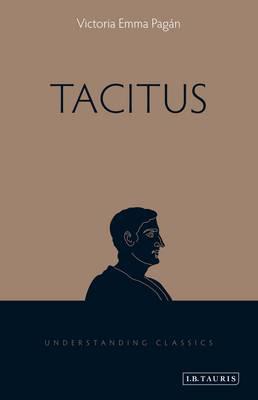
The greatest of Roman historians, Publius Cornelius Tacitus (56-117 CE) studied rhetoric in Rome. His rhetorical and oratorical gifts are evident throughout his most substantial works, the incomplete but still remarkable Annals and Histories. In concise and concentrated prose, marked by sometimes bitter and ironic ...
The greatest of Roman historians, Publius Cornelius Tacitus (56-117 CE) studied rhetoric in Rome. His rhetorical and oratorical gifts are evident throughout his most substantial works, the incomplete but still remarkable Annals and Histories. In concise and concentrated prose, marked by sometimes bitter and ironic ...
Marcus Tullius Cicero (106-43 BCE) introduced Romans to the major schools of Greek philosophy, forging a Latin conceptual vocabulary that was entirely new. But for all the sophistication of his thinking, it is perhaps for his political and oratorical career that Cicero is best remembered ...
Marcus Tullius Cicero (106-43 BCE) introduced Romans to the major schools of Greek philosophy, forging a Latin conceptual vocabulary that was entirely new. But for all the sophistication of his thinking, it is perhaps for his political and oratorical career that Cicero is best remembered ...
What reader could fail to be enthralled by the Iliad and the Odyssey, those greatest heroic epics of antiquity? Yet the author of those immortal text remains, in the end, an enigma. The central paradox of 'Homer' is that- while recognized as producing poetry of ...
What reader could fail to be enthralled by the Iliad and the Odyssey, those greatest heroic epics of antiquity? Yet the author of those immortal text remains, in the end, an enigma. The central paradox of 'Homer' is that- while recognized as producing poetry of ...
Utilizamos cookies propias y de terceros para mejorar nuestros servicios y facilitar la navegación. Si continúa navegando consideramos que acepta su uso.