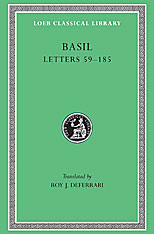
Basil the Great was born ca. 330 CE at Caesarea in Cappadocia into a family noted for piety. He was at Constantinople and Athens for several years as a student with Gregory of Nazianzus and was much influenced by Origen. For a short time he ...
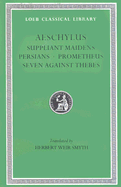
Aeschylus (ca. 525-456 BCE), author of the first tragedies existing in European literature, was an Athenian born at Eleusis. He served at Marathon against Darius in 490, and again during Xerxes' invasion, 480-479. Between 478 and 467 he visited Sicily, there composing by request "Women ...
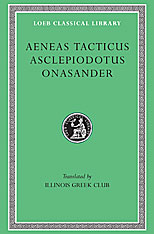
Aeneas was perhaps a general, and certainly author of several didactic military works of which the sole survivor is that on defense against siege. From it we can deduce that he was a Peloponnesian of the fourth century BCE who served in the Aegean and ...
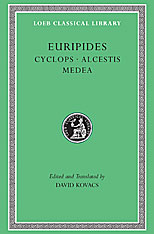
Euripides of Athens (ca. 485–406 BCE), famous in every age for the pathos, terror, surprising plot twists, and intellectual probing of his dramatic creations, wrote nearly ninety plays. Of these, eighteen (plus a play of unknown authorship mistakenly included with his works) have come ...
Dio Cassius (Cassius Dio), ca. 150–235 CE, was born at Nicaea in Bithynia in Asia Minor. On the death of his father (Roman governor of Cilicia) he went in 180 to Rome, entered the Senate, and under the emperor Commodus was an advocate. He ...
Dionysius of Halicarnassus was born before 53 BCE and went to Italy before 29 BCE. He taught rhetoric in Rome while studying the Latin language, collecting material for a history of Rome, and writing. His Roman Antiquities began to appear in 7 BCE. Dionysius states ...
Plutarch (Plutarchus), ca. 45–120 CE, was born at Chaeronea in Boeotia in central Greece, studied philosophy at Athens, and, after coming to Rome as a teacher in philosophy, was given consular rank by the emperor Trajan and a procuratorship in Greece by Hadrian. He ...
Procopius, born at Caesarea in Palestine late in the 5th century, became a lawyer. In 527 CE he was made legal adviser and secretary of Belisarius, commander against the Persians, and went with Belisarius again in 533 against the Vandals and in 535 against the ...
The philosopher Philo was born about 20 BCE to a prominent Jewish family in Alexandria, the chief home of the Jewish Diaspora as well as the chief center of Hellenistic culture; he was trained in Greek as well as Jewish learning. In attempting to reconcile ...
Plutarch (Plutarchus), ca. 45–120 CE, was born at Chaeronea in Boeotia in central Greece, studied philosophy at Athens, and, after coming to Rome as a teacher in philosophy, was given consular rank by the emperor Trajan and a procuratorship in Greece by Hadrian. He ...
Aristotle, great Greek philosopher, researcher, reasoner, and writer, born at Stagirus in 384 BCE, was the son of Nicomachus, a physician, and Phaestis. He studied under Plato at Athens and taught there (367-347); subsequently he spent three years at the court of a former pupil ...
Virgil (Publius Vergilius Maro) was born in 70 BCE near Mantua and was educated at Cremona, Milan and Rome. Slow in speech, shy in manner, thoughtful in mind, weak in health, he went back north for a quiet life. Influenced by the group of poets ...
Ammianus Marcellinus, ca. 325 - ca. 395 CE, a Greek of Antioch, joined the army when still young and served under the governor Ursicinus and the emperor of the East Constantius II, and later under the emperor Julian, whom he admired and accompanied against the Alamanni ...
Cicero (Marcus Tullius, 106–43 BCE), Roman lawyer, orator, politician and philosopher, of whom we know more than of any other Roman, lived through the stirring era which saw the rise, dictatorship, and death of Julius Caesar in a tottering republic. In his political speeches ...
Prudentius (Aurelius Prudentius Clemens) was born in 348 CE, probably at Caesaraugusta (Saragossa), and lived mostly in northeastern Spain, but visited Rome between 400 and 405. His parents, presumably Christian, had him educated in literature and rhetoric. He became a barrister and at least once ...
Cicero (Marcus Tullius, 106–43 BCE), Roman lawyer, orator, politician and philosopher, of whom we know more than of any other Roman, lived through the stirring era which saw the rise, dictatorship, and death of Julius Caesar in a tottering republic. In his political speeches ...
The importance of Isocrates for the study of Greek civilisation of the fourth century BCE is indisputable. From 403 to 393 he wrote speeches for Athenian law courts, and then became a teacher of composition for would-be orators. After setting up a school of rhetoric ...
Utilizamos cookies propias y de terceros para mejorar nuestros servicios y facilitar la navegación. Si continúa navegando consideramos que acepta su uso.